
Judith Rubinstein Remembers Some More | Judith Jaegermann | Vera Szöllős
JUDY (WEISZENBERG) COHEN
March 19, 1944 is etched in my memory forever. The day the Holocaust started in Hungary. This was the day the German Nazis occupied the country and linked arms with their Hungarian counterparts. This was the day when our lives, as we knew it then, was shattered forever and I was fifteen and a half years old, the seventh and youngest child in an Orthodox Jewish family. I had three brothers and three sisters. My parents were Sándor and Margit Weissenberg, (nee) Margit Klein. We lived in the city of Debrecen, in Hungary.
|
|

Life for us Jews in Hungary in general and for my family in particular wasn't exactly a bed of roses even before the Nazi occupation. Hungary was a military and ideological ally of Nazi Germany. After the Anschluss of Austria in March, 1938, vicious, discriminatory laws against the Jews were enacted and little by little we were stripped much of our economic, civil and human rights.
For my sister Klári and brother Leslie the most devastating was the edict called "Numerus Nullus" whereby Jewish students were not permitted into universities. My father had a metal and scrap-iron yard. When Hungary officially entered the war as an ally of the Nazis, the authorities revoked my father's business license under the pretext that iron & all metals are war material and Jews were no longer permitted to handle it. Nobody, in authority, cared how a family of nine could exist without any income.
Life for us Jews became more and more difficult with all the anti-Jewish laws and regulations. In addition, the never ending, vicious anti-Semitic propaganda of demonizing Jews, eventually created a hateful population and neighbours around us but our lives were not yet seriously threatened and somehow we were surviving - against all odds.
On that fateful day, on March 19, 1944, I remember sitting in the dining room, with curtains closed, we listened to the radio and heard in horror that German troops entered Budapest. We knew that meant occupation. A couple of days later SS soldiers appeared on our streets. A nauseating fear gripped my young stomach at that moment, which intensified in Auschwitz, and have not left me for decades to come.
Passover of 1944 was the last Jewish Holiday my parents and four of my seven siblings spent together.
My three brothers were already gone - conscripted for forced labour, attached to the Hungarian army as virtual slaves. (Munkaszolgálatos.) No uniforms or guns for them. These forced "labourers" became the cannon fodder for the Hungarian army. The danger of their work was of such magnitude that of the approximately 50,000 Jewish men who were sent to the Ukrainian front only 7,000 returned.
|
|
|
|

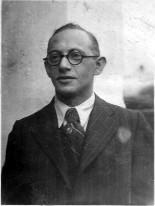

Once the country was occupied, the pattern was the same in Hungary as in all other countries in Nazi occupied Europe. A Jewish Council (Judenrat) had to be created. Through this council, orders and demands after another were announced by the Nazi occupiers. We had to wear a specific size yellow star on the left side of our chest, on the outer garment, at all times. (There was frantic search for the right kind of yellow fabric.) Naturally, this made us vulnerable targets in public places in the midst of a hostile population. Our Jewish schools were closed immediately. Jews had to give up all of their valuables, furniture, rugs, furs, money, gold, silver items and anything else that the insatiable Nazi "appetite" desired to hoard or ship to Germany. (The Nazis committed the greatest robbery of the century. ) One day my father was called to the Gestapo. They wanted our gold treasures that we didn't have. He came back with badly swollen feet that he could hardly walk. The Nazis beat his soles to a pulp.
Then the order came for the creation of two ghettos in the predominantly Jewish district. The small ghetto and the large one, for approximately 12,000 people.
We lived in the area of the city that became part of the ghetto. There were three dwellings situated around a courtyard and we had to open a huge iron door from the street to enter. One house was ours, one belonged to my Uncle Vilmos, my father's oldest brother and his wife Sarolta. They were childless and to us, seven siblings, they were like grandparents. In the third dwelling lived Aunt Rózsi and Uncle Herman with their two grown daughters. All these were simple dwellings, since we were not rich, but the many potted plants in the courtyard, my mother's favourites, made it colourful and scented the air, during the spring and summer.
I fondly recall the times when mouth watering aromas would permeate the air from the constant making of preserves of varied vegetables and fruits. The making of smoked meats and other goodies - to provide for the winter in a world where ready made, store-bought food was non-existent or would have been shunned by proud home makers like my mother was. My family, my friends, my school, my home -- were the eminently safe and care-free world of my young childhood.
When the ghettos were established, all members of our extended family moved in with us and into my two uncles' homes. There seemed to be people everywhere. We were terribly overcrowded, especially at night when we all had to lie down somewhere to sleep. Wall to wall people. Of course, the toilet facilities became totally inadequate. As a community, our isolation from the rest of the population in the city, was complete for they built a wall around the ghetto. We were permitted to leave the ghetto for two hours every day to do grocery shopping. However, this permit was for the late afternoon when most of the stores were empty of goods.
I remember, young as I was, we were all miserable. The women tried to make meals with the meager supplies but it was never enough. I worked as a volunteer nurse's helper in the makeshift hospital, installed in the formerly Jewish high school and did whatever I was asked to do.
Lack of adequate food and medical supply, lack of freedom, lack of privacy made life seem more and more hopeless every day. But little did we know then how well off we were in comparison of what was to come later on.
Our extended, large family, assembled in three dwellings, had some unexpected, clandestine help in the ghetto from some very kind people who were reluctant to identify themselves. They smuggled in much needed food, especially for the children, in the darkness of the night. I believe they were Jehovah's Witnesses. These kind people dared to follow their conscience and refused to be bullied into indifference or hatred. They represented one tiny, bright light in the prevailing societal darkness.
On one, unforgettably sad day it happened. It really came to pass - the dreaded deportation, in cattle cars. I still see many of our neighbours lining the streets watching and laughing (there was the odd tear here and there) as we were led through the city to the brick factory. People with whom our parents were friendly for thirty some odd years how could they turn adversaries in a mere couple of years, some in a few months? It was difficult for my young mind to understand this and it is still incomprehensible. As we learned after the war, many of these neighbours could hardly wait for our forced departure and went on looting our homes. They wanted to grab even those few, miserable items the Nazis didn't confiscate.
The "journey" in the cattle car took 3 or 4 days, I am not sure. How can one adequately describe the turmoil inside of the cattle car packed with 78 people?
My father, as a pious Jew, prayed a lot but judging from the expression on his face, I am sure he felt betrayed by his God. My mother cried, my 18 months old baby nephew, Péter, who was very sick, whined constantly for food we didn't have and all 78 of us wished for some water that was in short supply. The atmosphere in the cattle car, definitely foreshadowed something ominous to come. And so it was! For at the end of the "journey" we arrived at the hellhole of the world, a death camp called: Auschwitz- Birkenau, in Nazi occupied Poland.
The two men, prisoners themselves in striped clothing, whose job it was to get us all out of the cattle cars, kept shouting "los, los, heraus, schneller," were also telling, the young women, who were with children, in a whisper: "give the children to the grandmothers" and kept repeating it. There was no time to explain the "why", just this urgent tone to heed their warning. I didn't notice any woman, including my sister-in-law who was holding her infant son, handing them over to their own mothers but I heard later that some did.
As we disembarked, we were instantly separated
from the men, and that was the last time I saw my pious, 60 year old father.
Once separated from the men, the women had to go through further selections. Children, 14
years old and younger, regardless of their gender, and their mothers were
ordered to stay together. High ranking SS officers using their thumbs
only
to indicate who goes where. To the left: women with children, pregnant
women, older women (45 and up). To the right were sent only the young
women like my three
sisters and myself who seemed fit for work. Unbeknown to us, we
were sentenced. In a split second I was torn from my mother without
understanding
what was happening or having a chance to say good bye. We didn't
know we
had to say good bye. We didn't know we'll never see each
other
again. At 15 1/2 this was pretty devastating and there
is still a void in my life for not having had that last hug and kiss
from my
mother.
However, I was lucky for I had my three older sisters with me, at least for a little while.
Shortly after our arrival and the deadly "selection", in an ugly gray looking building the Nazis deceptively called "the sauna", we were ordered to undress - to the nude - they stripped us of our clothing, shaved off all our hair and all bodily hairs. We felt humiliated and degraded by being forced to stand naked in front of all those SS men and women. Our feminine sensitivities were callously trampled on. Then we were allowed to have two minutes of cold shower; driven outside wet as we were; and thrown a garment, (really a piece of rag) they called "dress", to wear. Fitted or not, we couldn't complain. If we did, we got the "stick" on our backs.
I received a very long, light blue nightgown. My eldest sister Elizabeth, 27 years old, immediately knew what to do. She tore off enough material from this nightgown to create four narrow scarves. Thus, the four of us could cover our bald heads and feel just a tiny bit less humiliated.
After this ordeal, we were marched to the camp that became our "home" for a few months. This was called, B/III or Mexico, the name the prisoners gave this most primitive, unfinished of the many camps in Birkenau. This camp did not have running water or proper toilet facilities. The barracks had no bunk beds - we, hundreds of women in each barrack, slept on the wooden floors, tightly packed like sardines in a can. If, one wanted to turn over the whole row had to turn. I remember we, my sisters: Évi, Klári, Erzsébet (Böshke) and I, cried through that first night along with all the others. I cannot recall crying again till after the war.
|
|

In Birkenau, even though we learned days later, that all those who were sent to the left at our arrival, my parents; my sister-in-law with her infant son; all my female relatives with their young children, were murdered in the gas chambers, and then their bodies were burned in the adjacent crematoria. Even though, we lived with the constant stench of burning flesh, and aching hearts, there was no time or opportunity to mourn. Every ounce of our being was needed for survival and survival alone.
We also realized, albeit too late, that those men who urged the mothers to hand over their children to the grandmothers, were really trying to save the lives of the young mothers. For they knew that the elderly and the very young will be murdered by gas anyway, regardless who held their little hands or carried their tiny bodies. (For more information on this subject, please read the "Canada Commando" essay on this web site's " essays" page).
In hindsight, it is clear that in Birkenau being a father didn't automatically sentenced a man to death. But being a mother with a child or visibly pregnant, or just holding the little hand of a child, even if the child wasn't your own, meant instant death.
My dearly beloved oldest sister, Erzsébet, 27, by that time a seasoned Socialist-Zionist, (Hashomer Hatzair) politically aware individual, understood clearly that in Birkenau a mass murder was taking place and tried to make sure we'll survive. The first thing she did was: she borrowed a knife and got hold of a piece of wood somehow and made four "spoons". With these spoons she literally, force-fed us younger siblings by instructing us to hold our noses and try to swallow that awful looking and tasting "dörgemüse" soup that was dished up to us as something edible. I still hear her voice: "we must survive -- eat, eat and eat.
Our existence in Birkenau, this beyond-all-imagination, hellish place on earth, was very precarious. Any hour of the day there could be a "selection". This meant that we had to file by, in front of Dr. (?) Josef Mengele or, other doctors, most of the time naked, and we were inspected. Those who were considered too skinny, or showed signs of any illness or had a rash on her body or face were "sentenced" to be murdered in one of the four gas chambers. that day. The fear of these anticipated events engulfed me at all times. I lived with constant fear. I was absolutely terrified to be left alone, to be separated from my sisters or sent to be gassed. As a result, I developed a stomach ulcer.
There were corpses around us - constantly. These were picked up usually during those grueling roll-calls (Zehlappel.) in full view for all of us of to see. These 'almost corpses' were handled like logs. Just thrown on a men-pulled wagon. But much too often they weren't really dead yet. Their arms started to flail, the eyes in their sockets moved around, like silent pleas for help. And we we were not permitted to do anything, just stood there totally impotent to respond. These agonizing memories stayed with me for decades, giving me nightmares. After the war I learned that these half dead, half alive women weren't even gassed first but cremated while still breathing. Humans' inhumanity to their fellow human beings was totally unrestrained.
Hunger - the ever present hunger. I still have memories of feeling hunger - a relentless, never-ending hunger. I didn't have a shred of hope of ever satisfying it.
Then the day I feared most, arrived! It happened! The four of us sisters were, unfortunately, in two stages, separated. First Klári (22) and Évi (18) were taken from Birkenau and till after the war I had no idea what happened to them. (Neither did they know what happened to me.) Months later, I was selected and torn from my last remaining sister, Erzsébet, during another selection. As I learned much later, the selected group I was in, was earmarked for gassing. I was deathly ill on that day, with high fever and diarrhea. I did not comprehend what was happening around me. But Erzsébet, saw and knew. I could see she was crying when she looked at me, from far, for the last time but I didn't comprehend - why.
|
|

I learned after the war, that eventually, when the Nazis started to evacuate Auschwitz-Birkenau, she too was transferred to the Stutthof concentration camp in Germany. There, miraculously, she met up with Évi and Klári. Now the three of them were together and I remained alone. Reportedly, she told Évi and Klári that I had been gassed and they said Kaddish (Jewish prayer for the dead) for me.
I surmised, many years after the war, that most likely, the entire "selected" group and I, we owe our lives to a number of courageous women and men. The six women, as members of the resistance in Auschwitz, managed to smuggle out explosives from the factory, Union Werke, where they worked. They gave it to the men who worked at the gas chambers in the Sondercommando. The men, reportedly, made a very primitive bomb in a sardine can with the explosive powder the women gave them and managed to blow up crematorium IV and the adjacent gas chamber. Killing a number of German SS guards at the same time. After this incident the gassing of prisoners stopped for a few days. That was our luck. I understand the gassing resumed again and continued till mid November 1944. (More on this event please read the essay "Women of Valour" on this web site).
My sister Erzsébet, of course, was unaware that instead of being gassed, our entire, selected group was directed to another camp for overnight and next day shipped to a concentration camp called Bergen-Belsen in Germany. Here, while in the beginning, conditions were better then in Birkenau, very quickly the situation deteriorated and large scale starvation and typhus epidemic set in. At this point, I reached the ripe old age of 16 and was alone.
The Feig sisters, Sári and Edith, whom I knew personally from Debrecen, took pity on my solitude and at my request, I became their lagerschwester (camp sister). From then on, we looked after each other. Mainly Sári, who was about seven years older, looked after us. The three of us shared absolutely every scrap of food. In a death camp it was very important to know that someone cared whether you wake up in the morning. Without the help and care of Sári and Edith I would not have survived, I am sure of that.
In January 1945, from Bergen Belsen, 500 of us, were taken to work in the Junkers airplane factory, in Aschersleben, somewhere near Leipzig, in Germany. Twelve hours of slave labour per day was very tough for our, by now, greatly weakened constitution. But, in comparison with death camps, the accommodation seemed palatial. It was January 1945 when we arrived and bitter cold even if one was properly clothed -- which we weren't. Blissfully, the barracks were heated with huge, round, hot water pipes running through the rooms. We each had single bunk beds, with thin straw "mattresses" and many bedbugs for sleep-mates. The quality and the quantity of the food was also better, while still not enough. We used to marvel at the bits and pieces of meet and potato swimming in the thin soup.
My foreman, in the factory was a French war prisoner called, Argo. 80% of all those who worked there were prisoners of one kind or another - all from Nazi occupied, oppressed Europe. There were small contingents of Nazi collaborators too, who came as "freiwilling arbeiter" (volunteers) to help the Nazi war effort. Some were from Belgium and some were, mainly women, from the Ukraine. Argo enlightened me who is who. Who I should trust and who I should not. Every time he wanted to indicate to me that something hopeful is happening, very, very quietly he'd sing the Marseilles, the French National anthem. We had to be very careful. We, the Jewish prisoners, were constantly watched by female SS overseers, (aufseherinnen) from the upper galleries.
We worked here till sometime in April 1945. Unexpectedly, early, one Saturday morning the American Air Force came, the blessed bombardments started and the factory was destroyed within hours. Watching the bombs fall was a magnificent sight. Obviously the war was coming, slowly, too slowly for us, to an end -- so we thought and hoped.
Once the factory was in ruins, we had no work. All of our SS guards have disappeared overnight. Then the order came to be transported to Buchenwald to be executed. The high ranking SS officer who was suppose to carry out the order, did not. Instead, he ordered us to go on a "march" to nowhere. We had to pack up our meager belongings, line up, get to the highway and march. Just march ! march ! he ordered and "supplied" us with guards and he too disappeared.
I have no idea how long this march lasted. Maybe 8 days or less. We had no calendar. All I know is that we marched and starved, starved and marched for there was no supply of food or water for us. I have no idea how Sári, Edith and I managed to survive. We lived and acted like animals. Raiding garbage cans, begging, ate rotten, dirty vegetables dug from the fields. I remember an overwhelming desire to eat and not move my body -- ever again. Just eat and rest and get rid of the lice covering my clothes and body. Those were my very modest wishes. As the days wore on, my feet were bloodier and bloodier, for all I had was wooden clogs held together by a piece of canvas and a piece of cord on my bare feet. Those who couldn't keep up were left by the wayside to die. Finally, this group of emaciated, dirty, utterly hopeless, bedraggled group of Jewish women were liberated, inadvertently, on May 5, 1945, by the American Army on the road. Then in a small town called Düben, the US military command started to look after us - sort of. I believe, we numbered less than 200 of the original 500.
We were not the only "marchers" on the roads in Nazi Germany. Every day we saw "marchers" like ourselves, in striped clothing, dragging themselves on the other side of the road, going in opposite direction. There was this unbelievable, no-rhyme-or-reason, marching in Nazi Germany during the last few weeks before the end of the war and the Holocaust.
One day, however, while marching, we saw a group of soldiers, on the other side of the highway, marching and being brutally beaten, with huge horsewhips, by their numerous SS soldier-captors. I am glad that in spite of our terrible condition and hopelessness, we remained humane enough to be horrified by what we saw. We stopped briefly to watch for these were different soldiers - they were all black men in various, tattered uniforms. Some wore white turbans. We were amazed - we never saw people like these before.
Today, I know they were black soldiers from the colonies of the British commonwealth and some from the French colonies. Some were American black soldiers. They came to help their white "brethren" to fight the Nazis in Europe. Far from their cities, towns and villages and families. I am eternally thankful to all those soldiers, from all over the globe, who were willing to give their lives, if need be, to see this world freed from Nazism and fascism.
The joy of liberation on
My 5, 1945! We
comprehended its significance only in terms of that moment's misery --
what it will do for our bodily and mental needs. However, the
feeling of elation that we are free of fear was indescribable.
Then came the rest:
To
get rid of of
our filthy lice-infested clothing. To wash ourselves and our
growing hair. To feel clean
towels against our bodies. To wear clean clothing - yet again - as we used to,
it seemed, a hundred years ago. To attend to our bloodied, infected or swollen feet. To sleep in a real bed
between clean
bed linen. To eat and eat and eat, knowing that tomorrow we can eat again.
All normal
every day activities for most people but of which we were deprived far too long.
After we became "born-again" human beings, the inevitable anguish set in. We started to think about the future. The question we all asked, I asked: "What now"? "Do I still belong to anyone or, at 16, am I all alone on this earth?" These were agonizing, heart-wrenching question we all wrestled with. Where is the rest of my large family? How will I find them?
In search of them I decided to go back to Hungary and so did Sári and Edith. We went back - home(?). The journey was arduous in war ravaged Europe but we got there. I found, back in Debrecen, the youngest of my three brothers, László (Leslie). He was still in a very weak physical condition, but he was there, he was alive. Mine was the difficult task to tell the few male cousins who survived the forced labour camps attached to the Hungarian army that their wives and children were murdered in the gas-chambers of Birkenau of which, at that point, none of them heard. They thought I went mad. Nobody could understand my devastating experiences so I stopped talking. Not knowing how to handle my mournful, psychological and emotional solitude, or, what else to do, I went back to school trying to block out all that I experienced in the camps, that no one wanted to believe at that point.
|
|
Only months later did we learn that our sister Évi has also survived and is living in Germany in one of the Displaced Person, (DP) camps convalescing from her singularly horrific experiences and near death. In February 1946, Leslie and I left Hungary, this time voluntarily and for good.
|
|

It was an illegal and very difficult journey, back to Germany, through the Austrian mountains, with the Bricha, a clandestine Zionist organization. Eventually, the three of us, had our tearful, bittersweet reunion. (Of course, I was the last person Évi expected to see alive.) She told us her harrowing story of survival. Among other stories she had to tell us that our sisters Klári and Erzsébet died, practically in her arms, in the Stutthof, concentration camp. Klári suffered from severe malnutrition and at one point went blind as a result. Plainly, she was murdered by the Nazis by starving her to death. Böshke was also starving but at the end, untreated pneumonia coupled with extreme starvation that killed her.
My
dearly beloved sister, Évi, felt guilty, till her dying days, for
not have been able to save her two sisters.
A guilt she shouldn't
have had. Such was the distressing aftermath of the Holocaust on my sister.
While we were back in Hungary, Leslie and I learned that our two oldest brothers were killed in the Ukraine. My oldest brother Jenö was murdered along with 400 hundred other Hungarian Jewish men because they were in a hospital, sick with typhus, and the withdrawing Hungarian army instead of taking these sick men back with them to Hungary, they burned down the hospital in Dorosits -- with the sick men inside. A few men managed to escape from this inferno unnoticed - to tell it all.
Jenö's infant son, Péter, and wife Magda Weisz, were murdered in the gas chambers of Birkenau. Father and son were murdered in two different hells of the Nazis and Hungarian Fascists and they never laid eyes on each other. His wife, was pregnant when he had to leave home. My other brother Miklós, was last seen alive before a big battle at Voronyez, in the Ukraine. Most likely he was killed in that battle that wasn't his battle at all.
The three youngest of my, once large, family survived. After a two year stay in the Bergen-Belsen displaced persons camp, near Hanover, in Germany, we managed to emigrate to Canada in 1948 , as contracted needle trade workers. We lived up to our contractual agreement. I went back to school and retrained myself for office work. I became a loyal, useful and enthusiastic Canadian citizen joining Canada's civil society.
My adjustment and deliberate acculturation to Canada is another story for another day.
Eventually, I married a wonderful, Canadian born man, Sidney Jessel Cohen, and we have a daughter, Michelle Elizabeth and a son, Jonathan Alexander. My sister Evi and brother Leslie never married and unfortunately, they both died, years ago, of cancer. I no longer have anyone to share my childhood memories with. This is a special kind of void that nothing can fill any more.
The memory of the death camps and being victims of the Nazi Holocaust never fades. However, through the decades, I accomplished a lot. Built a new life with new skills, learned to love and be loved again and found even happiness.
To teach younger generations about what the ultimate result of blind hatred was and still is and because of a confrontation I had with a Neo-Nazi group in downtown Toronto, I decided, after my retirement, to become active in Holocaust education - to remember those who were so brutally silenced forever and to remind all those, willing to listen, that our collective task today is to work on prevention, so that nobody should ever have to live with memories like we, Holocaust surviving witnesses, have.
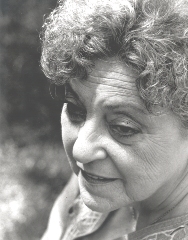
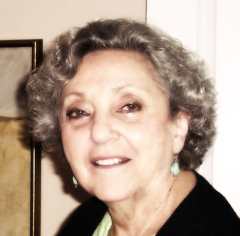
Judy Cohen, 2002 and 2008
© Copyright Judy Cohen, 2002.
All rights reserved.